Housing Guide in WoW Midnight – What We Know Now
We have been waiting for proper housing in World of Warcraft for what feels like forever, just like you. With WoW Midnight finally bringing real player housing, our whole ChaosBoost team basically took up residence on the PTR and refused to leave. Housing in Midnight is not some side feature that disappears next patch – it’s a long term system built to grow with the game and with your account.
And with this guide, we’ll be walking you through everything we know so far, and sharing how we’re planning our own homes – because you know we are total WoW nerds.
Getting your first house – how access works
Housing is tied to the Midnight expansion, so the main requirement is pretty simple. If your account has Midnight, you should be able to get a house. When the patch with housing goes live, your first log in will give you a quest that points you toward the housing system. It’s really just a guided intro, not some puzzle for you to figure out on your own. You follow the markers, talk to the NPCs, and they walk you through claiming your first plot.

If you don’t have Midnight yet, you can still poke at the system a bit in a limited way. You can visit neighborhoods, see what other players’ houses look like, and start collecting some decor from certain world activities. But if you don’t own Midnight, you won’t be able to actually buy a plot and put a house down. Think of it like being able to visit your rich cousin for a chat, but not getting the deed to their pad. Once you upgrade to Midnight, all the decor you collected will be ready to use though.
Warbands and account wide housing
One of the best parts of housing in Midnight is how well it plays along with your account – your houses are tied to your Warband (which is just Blizzards new term for your shared roster of characters), so every character on your account can get into your houses, no matter which faction they’re on. Your decor collection is also account wide, so if one character unlocks a chair, everyone can use it to decorate their pad.
You can have one house on the Alliance side and one on the Horde side per account. In practice that basically means you can have, for example, a peaceful forest home in the Alliance zone and a brutalist cliff hut in the Horde zone – all your alts can visit, hang out, and help decorate. It feels less like you are building a house for a single main, and more like you are building a base of operations for your whole roster. Which is huge for altoholics like us.
Neighborhoods – your new housing zones
Houses don’t just float in mid-air. They live inside larger maps called Neighborhoods. At launch there are two major Neighborhood zones. For Alliance themed housing you get Founder’s Point, which feels a bit like a mix of Human and Night Elf friendly landscapes. For Horde themed housing you get Razorwind Shores, with more rugged, Orc and Blood Elf flavored terrain.
Each Neighborhood is made up of around fifty plots. Every plot has the same size but a different location in the landscape. Some are on hills. Some are near lakes. Some are tucked in trees. When we were running around the test servers, half the fun was just flying around and arguing over which exact hill we wanted to live on.
Public vs private neighborhoods
There are two main types of Neighborhoods and they feel like chalk and cheese. Here’s a quick rundown.
| Type | What it is | Who controls it | Who can join |
|---|---|---|---|
| Public Neighborhood | Default housing instances created by the game as needed | Fully handled by Blizzard systems | Anyone with Midnight can buy a plot if there is space |
| Guild Neighborhood | Private instance tied to a guild | Guild leadership controls settings and invites | Members of that guild and whoever they whitelist |
| Charter Neighborhood | Private instance created by a group of players | The charter owner and officers control it | Invited players, often friends, communities, or RP groups |
Public Neighborhoods are great if you just want to grab a house and not worry about the politics. Plots open up in these as more players join housing and the game automatically spins up new instances when needed. Guild and Charter Neighborhoods are where social groups build their own towns. We already plan to put our ChaosBoost guild in a shared Charter Neighborhood just so we can turn a corner and see our whole raid team all living in the same virtual street.
Claiming a plot and moving later
Claiming a plot to build your dream home is actually pretty easy peasy. You just head to the housing hub, pull up the Neighborhood map on your screen & take a flyover to check out the plots. When you spot a free plot that catches your eye you simple interact with its marker, pay a small amount of gold & hey presto it’s all yours. You get your house shell up, the interior unlocks & you get to start decorating.
Best part is that you’re not locked in – if you change your mind about a plot, you can move on to another one or even switch Neighborhoods. And the good news is that your interior layout is saved as a template so you don’t lose all those hours you spent decorating. There might be a slight cooldown or some minor snag to stop people jumping ship every 20 minutes but overall it’s not a problem to move if you regret your first choice.
Interior vs exterior – what you actually customize
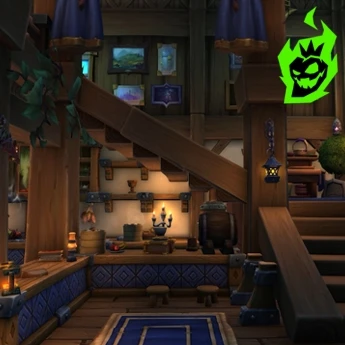
Your house is split into two different spaces in your mind. The exterior & yard are part of the shared Neighborhood map – that’s where other folks will see your home when they’re out running around. The interior is a separate, instanced space that loads when you step thru the door. And the magic of MMOs happens – inside can be way bigger than it looks outside.
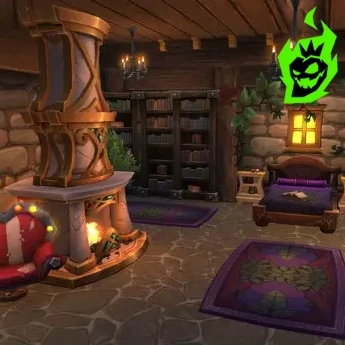
You can fiddle with both layers but in different ways. Outside you get to pick some architectural style, mess with features like roof shape or windows if they’re available & drop in some outdoor decor in your yard. Inside it’s a blank canvas or semi-blank floor plan & a humongous toolbox full of walls, floors, furniture, lights & all sorts of fun toys. The minute to minute decorating fun mostly happens inside but the exterior look & yard layout are a huge part of how people first see your home.
Basic mode vs advanced mode decorating
When we first opened up the housing editor, the main choice was which mode to use. Basic Mode is designed to be a breeze – items snap to a soft grid, collision is on & things auto-align to surfaces. So if you try to put a chair next to a table, it lines up nice & smooth. If you try to hang a painting near a wall, it sticks to it rather than floating off. It feels a lot like decorating with safety rails in place.
Advanced Mode is where the real fun is if you like to push the limits a bit. In Advanced Mode, collision is way more relaxed so you can push items into each other, make them float off the floor or spin them around on multiple axes. You also get a lot more control over scaling items within limits. That’s how some folks build custom staircases out of chairs, turn bowls into wall lamps or make fake trees by fiddling with multiple assets.
To be honest, most of us ended up swapping between modes all the time. We used Basic Mode when we just wanted quick, clean placement – like lining up chairs in a row. Then we’d swap to Advanced Mode when we wanted to do something a bit more weird – like building a secret alcove behind a bookshelf. The game lets you change modes on a dime so you can use each one for what it does best.
Types of decor – commodities, investments, and trophies
Not all decor is created equal. We found it helpful to think of items in three rough categories.
- Commodities
- This includes everyday furniture like chairs, tables, lamps, bookshelves, rugs & all that basic clutter.
- Usually easy to get from vendors, simple quests, drops or low-effort activities.
- You’ll use these to fill space & make a house feel like a home.
- Investment Pieces
- Fancier or more complex items like ornate bookshelves, fountains, complex lighting & themed sets.
- Often crafted by professions, bought from special vendors or rewarded from focused content like reputations.
- These are the pieces you plan around, not just scatter everywhere.
- Trophies
- Big flex items that clearly say ‘I did this’. Think boss heads, banners, special statues or achievement-linked decor.
- Usually tied to raids, high-difficulty content, long metas or special events.
- You don’t need these to make a house look good but they help tell the story of your character.
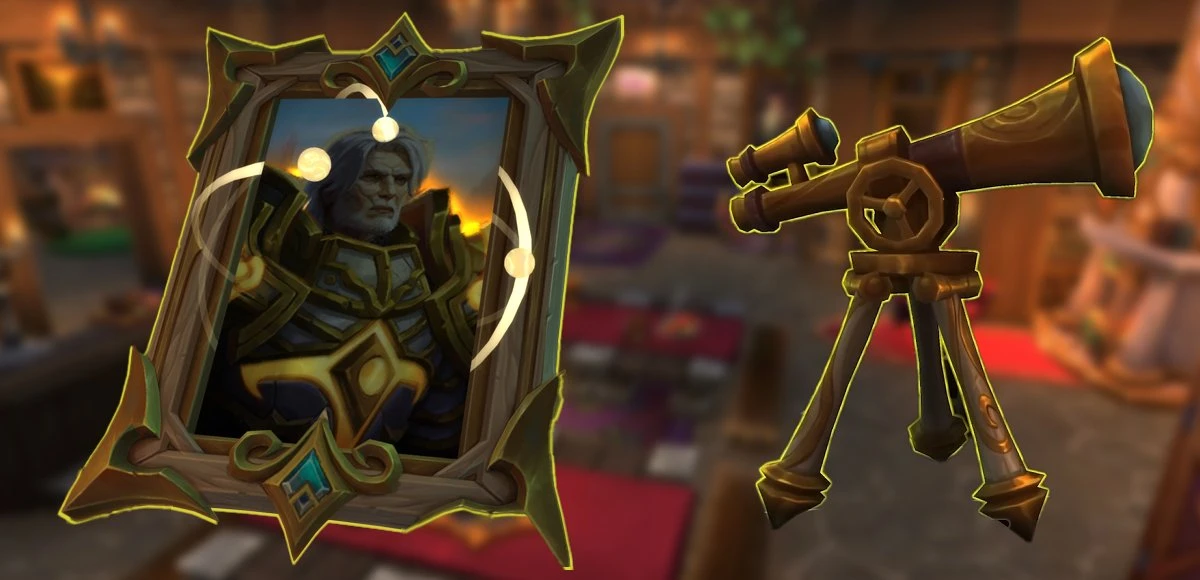
This way, housing doesn’t turn into a pure rare drop grind. You can make a cozy house with mostly commodity level items & a few crafted investments. Then you can spice it up with trophies as your gameplay achievements stack up.
Where decor comes from – your long term collection game
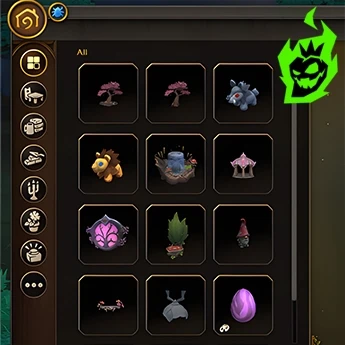
Housing is basically transmog for furniture. Once you start thinking that way, it clicks. Almost every activity in the game can feed your decor library in some way. Here are the main sources we have seen and tested.
- Quest rewards
- New Midnight zone quests often give furniture or themed items instead of just gold.
- Old quests across Azeroth have had decor added to their reward tables.
- If you already did those quests, the game grants the decor retroactively.
- Achievements and metas
- Classic raid and old expansion achievements now award trophy decor.
- Dungeon and raid achievements might unlock banners, plaques, or statues.
- Seasonal achievements can unlock holiday themed decorations.
- Reputations and vendors
- Many reps have housing vendors that sell faction flavored pieces.
- As your reputation rank climbs, more decor unlocks.
- Some vendors use new housing currencies instead of raw gold.
- Professions and crafting
- Professions like Blacksmithing, Tailoring, Inscription, and others can craft furniture and decorative objects.
- These crafted items can be traded, so crafters can sell decor on the Auction House.
- Materials often come from the relevant expansion content, giving old zones new life.
- Dungeons, raids, and world bosses
- Bosses sometimes drop trophy items and other decorative rewards.
- End bosses and secret bosses are especially likely to have cool stuff.
- You can farm these at your own pace, alone or with help.
- PvP and holiday events
- Battleground achievements and PvP rankings might grant war banners or arena themed pieces.
- Holidays like Hallow’s End, Winter Veil, and others give matching decor every year.
- Over time you can build entire seasonal sets to swap into your home.
Because decor is account wide, your main can farm a raid trophy while an alt casually grinds a rep vendor, and both rewards end up in the same shared library. It feels very satisfying every time a new item pops up in your housing catalog.
Social tools – visitors, permissions, and showcasing
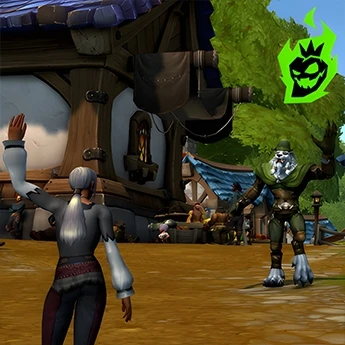
A house is way more fun with other people in it. Housing lets you control who can come in and who can help decorate. You can set your home to be private so only you can enter, or open it up to friends and guild mates. You can even turn on a public mode where people are encouraged to come in and look around.
Different permission levels let you decide who can just look around and who can move furniture. Maybe only your Warband can get in there and make changes, but anyone can pop by and check it out. We already know a lot of roleplayers will want to set up inns and guild halls with public entry and private back rooms.
Guild and charter neighborhoods – building a town together
Guild Neighborhoods and Charter Neighborhoods are where housing really starts to feel like a community project. In a Guild Neighborhood, your guild leadership can grab a big chunk of land and let guild members buy plots within it. Suddenly your raid leader’s got a house right across the street from your healer’s garden.
You can set up social nights where everyone opens their doors and gives each other a tour. It’s a real fun way to build some camaraderie.
Charter Neighborhoods are a bit the same, but they don’t need a formal guild to exist. Think of them as community zones. Maybe a group of roleplayers sets up a wizard quarter, or a Mythic plus community sets up a training village. The person who sets up the neighborhood gets to decide who joins and what kind of theme they’ll use. Housing almost becomes a way to build your own little map for your community.
Neighborhood Endeavors – monthly community projects
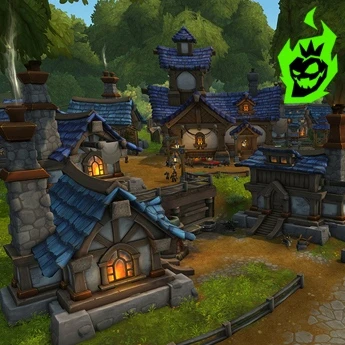
Each neighborhood is part of a rotating program of events called Endeavors. These are neighborhood wide goals with a specific theme, like a festival or a cultural thing. When an Endeavor is active, players in that neighborhood can contribute by doing various activities. That might mean running a certain dungeon, or bringing in some crafted items, or whatever.
As the neighborhood gets closer to its Endeavor goal, everyone benefits a bit. You get a special currency that local vendors accept. You also get a bump in your neighborhood or house level, which unlocks more decoration space and some special cosmetics. At milestones, the neighborhood itself gets some visual upgrades related to the theme, like banners or lights or visiting NPCs. Endeavors scale with the size and activity of the neighborhood, so a small private neighborhood doesn’t have to hit the same numbers as a huge public one. That means you don’t need to live in a big city to see some progress. It kind of works like a community battle pass that resets regularly and keeps people coming back to their housing zones.
House level and capacity – progression without power
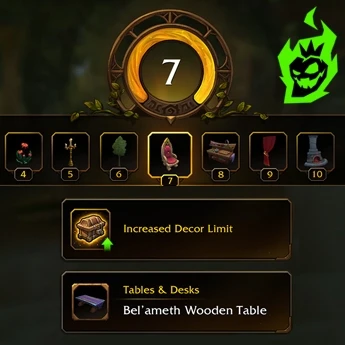
Your house has its own form of progression through Favor or house level systems. As you participate in housing related activities, complete Endeavors, and earn achievements, your house rank goes up. Higher ranks typically unlock a larger maximum number of placed items, access to more structural pieces, and sometimes special cosmetic rewards.
This progression feels meaningful without touching combat power. It is very similar to collecting transmogs or mounts. We like that there is a sense of growth without any pressure. You are never gated out of raids because your house level is low. You just earn more creative freedom as you engage with the system over time.
Not another Garrison – what housing is not
Any time housing comes up in WoW, someone gets flashbacks to Warlords of Draenor. So let us be very clear about what Midnight housing is not. There are no mission tables or follower chores in your house. There is no gold fountain that turns your home into a mandatory daily grind. There is no power bonus, stat buff, or raid advantage that requires you to invest in housing.
There is also no combat in and around your home. Neighborhoods are chill PvE and PvP free spaces. You are not going to get ganked while you rotate a sofa. That alone changes the vibe a lot if you remember old world gank towns. Housing is meant to be a break from pressure content, not another system layered on top of it.
How ChaosBoost can help without killing the fun
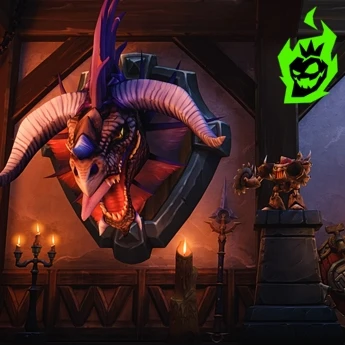
Housing is one of those systems where the joy comes from personal creativity. We do not want to take that away from anyone. What our ChaosBoost team can do is help with the parts that feel like chores so that you can focus on actual decorating. If you want a specific raid trophy decor but your schedule or group makes that difficult, we can carry you through the achievement so you earn it legitimately. If you need large piles of materials or reputations for profession crafted furniture, we can farm and craft those on your behalf. We can also help push the harder dungeons, raids, or metas that unlock some of the flashiest trophies, while you keep your energy for placing every last chair and candle exactly where you want it.
Example home ideas – what we are planning for ourselves
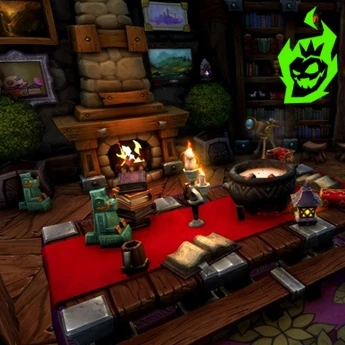
To make this more concrete, here are some home concepts we are building for our own accounts. You can steal these ideas or twist them into something new.
Raider trophy hall
- Big central room with weapon racks, boss heads, and banners.
- Each wall dedicated to an expansion or raid tier.
- Tables covered in maps and strategy notes, plus mounted achievements.
RP tavern or inn
- Ground floor with bar, tables, and a stage for performances.
- Upstairs with several small rooms for guests, each with a different style.
- Kitchen area with cooking decor and pantry shelves full of food props.
Mage tower or arcane lab
- Narrow layout with vertical emphasis and stairs spiraling upward.
- Crystal clusters, floating books, and arcane machinery as decor.
- Observatory style top floor with telescopes and star charts.
Druid grove or nature retreat
- Lots of indoor trees, vines, and nature themed partitions.
- Water features like ponds, fountains, or little streams using clever pieces.
- Animal statues or pet displays to show your bond with the wild.
Collector museum
- Multiple rooms themed by region or expansion, each with related decor.
- Glass cases or pedestals made from existing assets to hold trophies.
- Wall plaques explaining what each item represents in your character story.
We are already arguing in our team channels about whose design is better, and that is kind of the point. Housing gives you endless ways to flex your creativity that are not tied to your rotation or DPS logs.
Final thoughts – our door is open
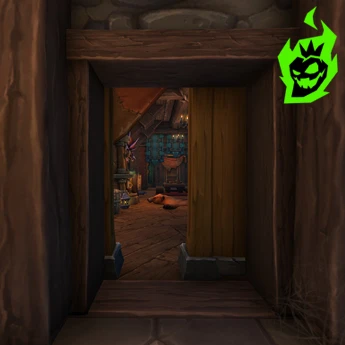
Housing in WoW Midnight feels like a big love letter to everyone who ever wanted their own corner of Azeroth. It is optional, it is flexible, and it is clearly built to grow over time with more decor, more styles, and more events. From our perspective as a boosting team and as long time players, it hits a sweet spot. It gives us something chill and creative to do between sweaty keys and raids.
We cannot wait to visit your homes, steal your best layout ideas, and probably trip over a badly placed stool in the dark because someone decided candles are “optional”. Whether you decorate solo, build a guild town, or just stack raid trophies to the ceiling, housing is about telling your own story. When Midnight lands, we will see you in the Neighborhood. If you spot a house full of slightly too many training dummies and empty coffee cups, that is probably ours.



 English


